Atenas

Destination
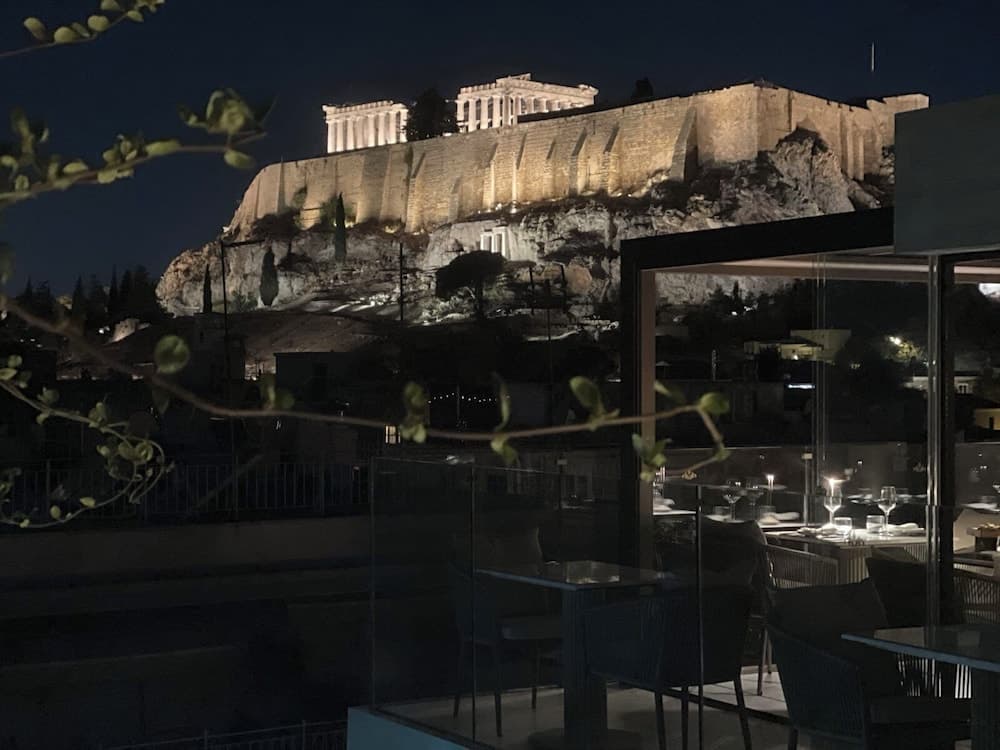
Discover Athens, where history meets modern life. Visit the cradle of democracy and explore millennia-old temples in a vibrant metropolis.
Atenas · Brasil
Photos
Discover the landscapes and culture of Athens



Editorial guide with history, culture, and practical tips to plan your trip.
Athens, in ancient Greek Ἀθῆναι (Athēnai), is not just a capital; it is the millennial epicenter of Western civilization. As Greece's largest and most significant city, Athens holds a title that transcends borders: being the guardian of an unmatched history. Its dominant location over the historical region of Attica gives it not only geographical importance but also profound cultural meaning to the entire world.
Since its origins, Athens established itself as a focal point of human and intellectual development. Its foundations are laid upon more than three thousand four hundred years of continuous occupation, making it one of the most ancient metropolises time has preserved. This longevity is not merely a chronological fact; it is the basis for a vibrant identity, where the echoes of Classical Antiquity resonate daily in the fast-paced and sophisticated rhythm of a cosmopolitan metropolis.
Today, Athens represents a complex fusion of eras. It manages to transition between the splendor of ancient ruins—witnesses to the cradle of democracy and great philosophical thought—and the pulsating energy of a modern global center of power. It is within this fascinating contrast that its greatest charm for travelers lies: a city where every corner can reveal a piece of human history.
The historical trajectory of Athens is epic, shaped by periods of intense ascent and profound transformation. At the height of the Ancient Greek period, Athens was not just a city; it was a powerful polis, that is, an autonomous and influential city-state, which dictated political, artistic, and philosophical trends across the European continent.
The Athenian urban development was intrinsically linked to its trade and maritime routes. The Port of Piraeus was a fundamental catalyst for this rise, positioning Athens as a crucial commercial center early on. This axis between land and sea allowed the city not only to survive but to flourish, making it an undeniable power in antiquity.
The persistence of Athenian life over millennia gives its history an almost mythical value. To be in Athens is to walk through more than 3,400 years of uninterrupted development, witnessing the evolution of civilization from its earliest political and artistic forms to becoming a modern hub of economic and cultural power.
The passage of time has not erased the legacy. The conceptual structures and intellectual advancements generated in Classical Athens continue to shape Western thought, ensuring that its historical narrative remains vital and relevant today.
Culturally speaking, Athens is more than an open-air museum; it is a living source of intellectual inspiration. Since the origins of Western civilization, it has been the cradle of revolutionary concepts, perhaps its most enduring and impactful legacy.
The city gained world fame for being a vibrant center not only artistically but also deeply academic and philosophical since antiquity itself. This environment conducive to critical thought housed some of the brightest minds that have ever walked the Earth. Notable places include Plato's Academy, where great dialogues on ethics and knowledge were established, and Aristotle's Lyceum, a center for fundamental studies in logic, science, and politics.
The concept of democracy, which developed in Athens during the 4th and 5th centuries BC, is largely credited to the impact of Athenian political achievements throughout the rest of the European continent. This politico-philosophical legacy established a paradigm that still defines global civilizational debate today.
Today, this cultural inheritance manifests itself in a cosmopolitan metropolis, where modern art coexists with ancient temples. Athenian culture is synonymous with an incessant dialogue between ancient tradition and contemporary avant-garde, offering the visitor a deep immersion into the philosophy of life.
Geographically, Athens is situated in a privileged position that has guaranteed it both historical prosperity and characteristic natural beauty. The city dominates the Attica region, an area crucial both geographically and historically for Greek development.
This location is strategic: it offers access to varied landscapes, from densely populated urban areas to proximity with the sea and historic ports. The very geographical layout of the city was shaped by its vital port, Piraeus, which facilitated maritime trade connections.
Geographically, Athens is an area of natural contrasts: on one side, there is the imposing architecture of archaeological sites; on the other, there is the dynamism of a modern metropolis. This coexistence of historical landscape and urban infrastructure makes Athenian geography a living laboratory of human history.
Demographic information points to a large population, consolidating its position as the largest city in Greece and an extremely dense and vital population nucleus, sustained by its status as a constantly growing economic center.
Although the provided facts do not specifically detail Athens' climate regime, it can be inferred that, as a Mediterranean coastal metropolis, it enjoys a typical regional climate. Generally, a Mediterranean climate is expected, characterized by hot and dry summers and mild winters. This climatic condition mitigates the impact of extreme seasons, making outdoor tourist exploration viable most of the year.
Proximity to the Aegean Sea influences temperature and humidity, mitigating thermal extremes both during peak summer and cold days. This geographical feature is fundamental for the city to maintain its welcoming atmosphere, regardless of the season the visitors arrive. (Note: The richness of data on history and culture outweighs climatic detail, but this description contextualizes the travel experience under the Mediterranean sun.)
For the global tourist, Athens is a destination of historical and cultural pilgrimage. One does not just visit a capital; one visits the cradle of Western civilization and democratic thought. The tourist attraction is multifaceted, blending the grandeur of millennia-old monuments with the vibrancy of a contemporary metropolis.
The main focal points are the archaeological sites that narrate the splendor of Classical Athens and its port. Walking through these ruins is participating in a silent dialogue with philosophers, politicians, and artists who lived millennia ago.
Beyond the antiquities, the modern tourist experience emphasizes Athens as a financial and cultural hub. The nightlife, restaurants, and art galleries mirror the city's cosmopolitan dynamism, attracting everyone from academics seeking inspiration to executives looking for sophisticated leisure.
The unique combination of its ability to absorb tourists interested in deep history (such as those seeking to understand democracy and Plato) and the appeal of modern urban life makes Athens an tireless destination, offering activities for all tastes throughout the year.
Athens holds fascinating curiosities that underscore its global importance. Firstly, the fact that it is considered one of the oldest and continuously inhabited cities on the planet is a record few places can claim. Being in Athens is feeling the uninterrupted passage of time.
Another notable curiosity lies in its modern economic standing. In analyses such as those from 2012, Athens was classified as one of the world's richest cities by purchasing power parity (PPP), besides being recognized in international cost-of-living rankings. These data attest that its role is not only historical but still vital and powerful today.
The academic legacy remains alive: mentioning Plato’s Academy and Aristotle’s Lyceum serves as a constant reminder that the city has been, since antiquity, an unparalleled intellectual center. These places are symbolic milestones of the incessant human quest for knowledge.
Finally, the contrast between being a cosmopolitan metropolis and simultaneously holding the title of the cradle of Western civilization is perhaps Athens' most magical peculiarity. It is a place where time seems to have stopped so that great thinkers could leave their legacies.
Everything you need to know to plan your trip
Reference figures to help plan your trip
Hotels in the area
332
Attractions
9
332 properties in the area
Hotels and experiences in the area
Everything you need to know to plan your trip
Athens is considered the cradle of Western civilization and democracy due to the immense impact of its cultural and political achievements during the 4th and 5th centuries BC.
It is one of the oldest cities in the world, with territory continuously inhabited for 3,400 years.
The city has been an artistic, academic, and philosophical center since antiquity, hosting Plato's Academy and Aristotle's Lyceum.
Currently, it is a cosmopolitan metropolis and the economic, financial, industrial, political, and cultural center of the Greek nation.
The powerful polis of Athens emerged alongside the development of the Port of Piraeus and dominates the Attica region.
Extend your trip to incredible destinations nearby
We personalize every moment of your journey — from iconic landmarks to hidden cultural gems.
Available 24/7 · Personalized consultations · Local expertise
Updated on June 7, 2026
Sources