Singapura
Destination
Discover Singapore, where modernity meets lush tropical nature in Southeast Asia. Plan your perfect getaway with essential tips!
Singapura · Brasil
Photos
Discover the landscapes and culture of Singapore





Editorial guide with history, culture, and practical tips to plan your trip.
Singapore, whose official name is the Republic of Singapore, is more than just a destination; it is a remarkable jewel-shaped island city-state. Located at the southern tip of the vast Malay Peninsula, in the vibrant heart of Southeast Asia, this metropolis represents an extraordinary example of human development and global urban engineering. Geographically, it is positioned at coordinates that place it 137 kilometers north of the imaginary equator line, guaranteeing a tropical climate and constant vitality.
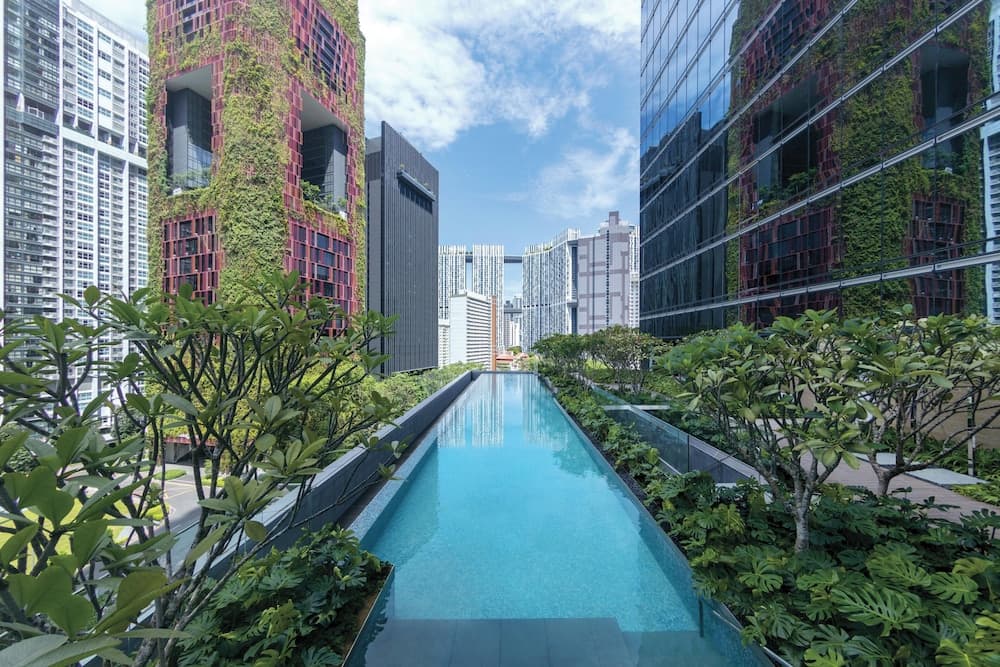
What makes Singapore unique is its dual profile: although recognized for being highly urbanized, its landscape manages to incorporate impressive natural areas. In fact, almost half of its total territory is dedicated to vegetation preservation, creating an enviable balance between vertical modernity and the serenity of tropical nature. This harmonious coexistence is not accidental; it reflects a development philosophy that prioritizes well-being and the environment.
In terms of international status, Singapore possesses undeniable prestige, recognized for having the highest Human Development Index (HDI) among all countries on the Asian continent. This fact is not merely statistical; it attests to the excellence in governance, quality of life, and social investment that permeates every aspect of life in the city-state.
Its physical structure also tells a story of ceaseless adaptation. Constant development requires expansion, leading Singapore to a remarkable process of maritime land reclamation. This human ability to shape its own continent, transforming oceans into solid ground to expand its territory, is a testament to its ambition and resilience.
While deep historical details are not included in this fact sheet, Singapore's legacy as an island city-state is intrinsically linked to its strategic location. Its position at the southern tip of the Malay Peninsula has never been without commercial and geopolitical importance. This geographical singularity is the pillar upon which its entire evolution rests.
The development we see today, with its index of modernity and high HDI, did not happen by chance. It is the result of centuries of adaptation and an impressive mastery in transforming geographical limitations—being composed of 63 islands—into grand economic opportunities. Singapore's history is the narrative of how a small nation managed to raise its standard of living to the highest level on the Asian continent.
The constant relationship between urban development and the need for territorial expansion has also shaped its trajectory. The continuous process of maritime land reclamation is not just a logistical challenge, but an integral part of modern national growth and determination history. This act of building land where there was once water symbolizes an unwavering will to prosper.
The way the city-state has managed to harmonize the dizzying pace of industrialization and tourism with the preservation of its rich vegetation demonstrates a historical commitment to a sustainable model—something that has become its defining hallmark and the engine behind its global prestige.
Culture in Singapore is a mirror of its unique geography: a dynamic melting pot where global modernity meets millennia-old traditions, all rooted in the multicultural context of Southeast Asia. The highly urbanized environment serves as a backdrop for a rich culture that pulsates through its streets and neighborhoods.
Despite the intense population concentration and skyscrapers dominating the skyline, Singaporean culture maintains a strong dialogue with its natural surroundings. The integration of vast green areas into the urban fabric is not merely aesthetic; it manifests as part of the lifestyle, promoting physical and mental well-being.
The status of having Asia's highest HDI is reflected in a culture that values education, innovation, and quality of life. People live immersed in a development pace that demands excellence and meticulous planning in all areas.
The very way Singapore interacts with its territory—by building new land through reclamation—reflects a cultural mindset of overcoming limits and relentless optimism. Where there is water, there is potential to be transformed. This philosophy of reinvention is the most palpable element of its culture.
Singapore, formally the Republic of Singapore, occupies a privileged geographical position at the southern tip of the Malay Peninsula in Southeast Asia. This positioning not only connects it commercially to major Asian centers but also grants its territory unique strategic importance.
From an island and maritime point of view, the country is notably composed of a cluster of 63 islands. However, this geographical fragmentation requires advanced connections and complex infrastructure to maintain the functionality of a single metropolis. The Singapore Strait, to the south, and the Johore Strait, to the north, are the main bodies of water that define its natural borders.
The geopolitical side is defined by its proximity to neighboring countries: it is separated from Malaysia by the Johor Strait in the north-south direction and from the Riau Islands (which belong to Indonesia) by the vital Singapore Strait to the south. These straits are not just lines on a map; they are the commercial arteries that guarantee its economic dynamism.
It is important to note the geographical duality: despite being considered highly urbanized, planning has managed to preserve almost half of its original territory covered in vegetation. Furthermore, the constant process of maritime land reclamation continuously transforms its geographical coordinates and defines an unprecedented scale of territorial growth for an island.
Located in Southeast Asia and 137 kilometers north of the equator, Singapore enjoys an equatorial tropical climate. This type of climate is characterized by being hot and humid all year round, without the dramatic seasonal variations found in regions farther from the equator lines.
Heat and high rainfall are defining characteristics that shape both daily life and the local ecosystem. This tropical climate is ideal for sustaining dense lush vegetation, a crucial factor in maintaining the balance between vast urban spaces and preserved green areas.
Its maritime proximity to the sea guarantees constant winds and oceanic influence on temperature, mitigating heat extremes and maintaining a stable climatic rhythm that favors both natural life and uninterrupted economic activity. It is this stable climate scenario that allows ambitious development projects, such as those achieved through land reclamation, to be continuously viable.
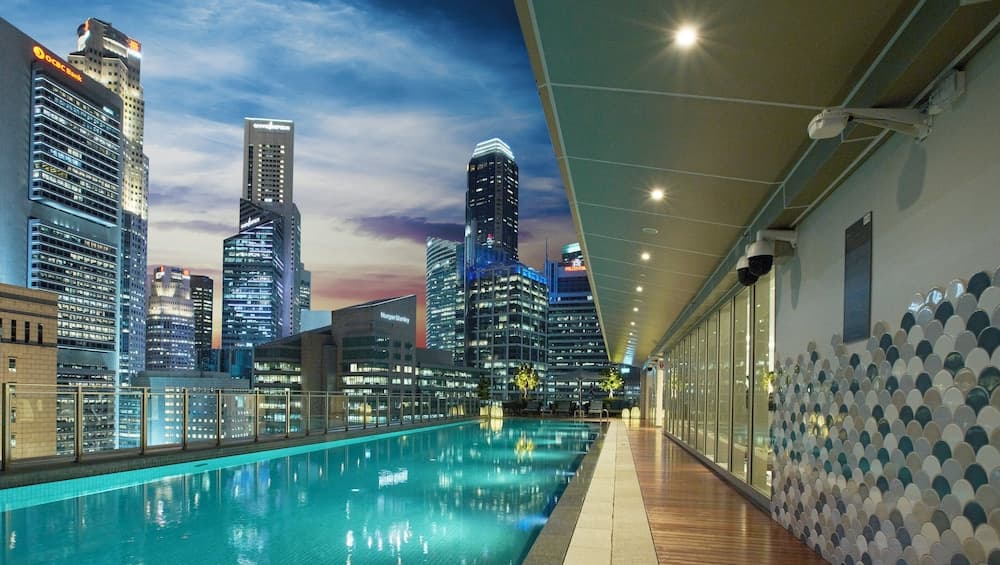
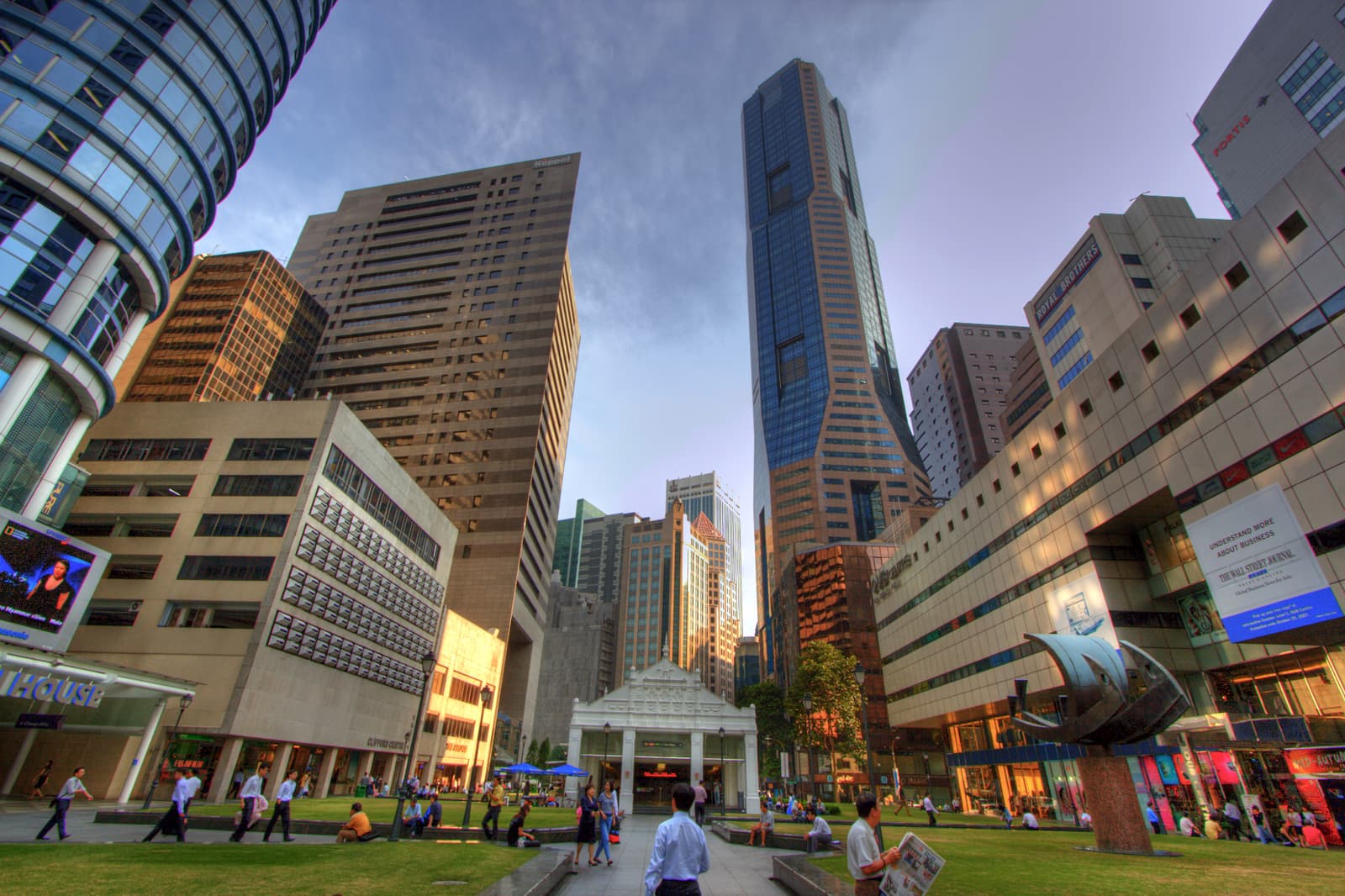
Tourism in Singapore is an experience of carefully orchestrated contrasts. The visitor confronts the stark contrast between the verticality and shine of hyper-modern infrastructure—a testament to its high HDI—and the serene exuberance of its botanical gardens and natural reserves.
For engineering enthusiasts, the process of maritime land reclamation is an attraction in itself. It is possible to witness how human ingenuity transforms marine landscapes into inhabitable and tourist spaces, representing a global architectural miracle.
The tourist experience is also marked by its impeccable efficiency. Everything in the city-state is designed for maximum flow of people and goods, making every journey an experience in itself. From the most modern financial hubs to residential areas that preserve tropical vegetation.
Tourism here is not limited merely to entertainment; it dives into the destination's capacity to balance extreme economic development with a visible commitment to sustainability. Exploring Singapore is understanding how it is possible to be simultaneously one of the most densely populated cities and, at the same time, keep almost half its territory covered in vibrant vegetation.
Singapore holds notable facts that make it a unique destination in Southeast Asia. Firstly, the country holds the title of having the highest Human Development Index (HDI) among all Asian nations, reflecting its success in uplifting and raising the standard of living.
A fascinating curiosity is its island structure: Singapore is composed of an impressive total of 63 islands. This dispersion requires a highly advanced logistics network to unite these small land masses into a single cohesive urban system.
Another notable fact that defines its modern identity is the continuous process of maritime land reclamation. Singapore does not settle for its natural limits; it actively expands its borders, transforming vast areas of sea water into new land space for development. This ability to "create land" is a true marvel of contemporary engineering.
Finally, despite being a global economic hub known for its intense urbanization and gleaming skyscrapers, the country maintains an ecological balance that preserves almost half of its original territory as green areas. This contrast between the concrete of development and the life of vegetation is perhaps Singapore's most magical and admirable fact.
Everything you need to know to plan your trip
Reference figures to help plan your trip
Hotels in the area
168
Attractions
9
168 properties in the area
Hotels and experiences in the area
Everything you need to know to plan your trip
Singapore is an island city-state located at the southern tip of the Malay Peninsula, in Southeast Asia, 137 kilometers north of the equator.
The country is composed of a cluster of 63 islands. It is bordered by the Johor Strait to the north, with Malaysia, and the Singapore Strait, which separates it from the Riau Islands (Indonesia) to the south.
Singapore is recognized for having the highest Human Development Index (HDI) among Asian countries.
Although it is a highly urbanized territory, nearly half of its space is still covered by vegetation. Furthermore, the country is constantly expanding its lands through maritime reclamation.
According to factual data, Singapore's estimated population is around 5.399 million people.
Extend your trip to incredible destinations nearby
We personalize every moment of your journey — from iconic landmarks to hidden cultural gems.
Available 24/7 · Personalized consultations · Local expertise
Updated on June 7, 2026
Sources