All destinations
Destination
Melbourne
Discover Melbourne, Australia's vibrant cultural and financial hub. Experience top gastronomy, lively nightlife, and high quality of life. Plan your trip today!
Melbourne · VIC · Brasil
Photos
Visual journey
Discover the landscapes and culture of Melbourne


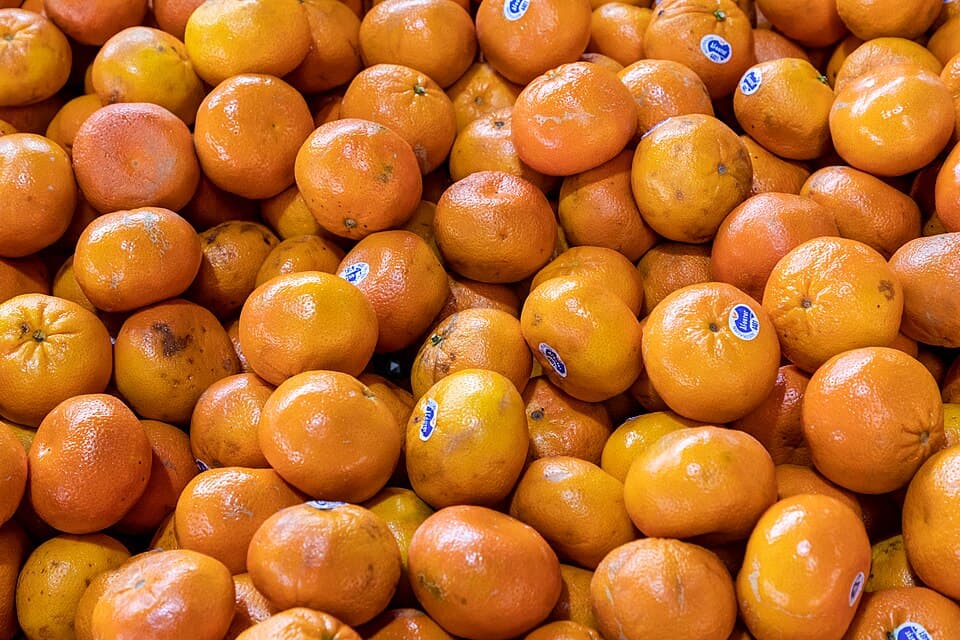
The spirit of Melbourne
Editorial guide with history, culture, and practical tips to plan your trip.
About
Melbourne is recognized not only as the vibrant capital of the state of Victoria, Australia, but also as an urban hub of growing global importance. Its demographic magnitude highlights its prominent status both in the Australian and international scenes.
Since 2023, Melbourne has consolidated itself as the most populous urban area in Australia—an impressive achievement that allowed it to surpass major metropolitan competitors like Sydney. This population growth reinforces its crucial role not only within the state of Victoria but across the entire federation.
In terms of geography and administration, the name "Melbourne" covers an extensive statistical area of approximately 9,900 km². This vast region is a dynamic economic engine, playing a central role in the Australian financial system and extending its influence throughout the Asia-Pacific region.
Melbourne's status as a high-performing city is not recent. It is consistently praised for achieving extremely high levels of development across multiple spheres of modern life, spanning from cutting-edge education to research and technological development sectors. This combination of factors guarantees remarkable quality of life for its residents.
History
While sources do not detail a linear historical timeline, it is evident that Melbourne built its reputation as a vital center through constant economic growth and adaptation. Its trajectory has transformed it into a robust financial epicenter, essential for both the Australian domestic market and the broader Asia-Pacific trade.
The city's development is intrinsically linked to its capacity to remain at the forefront of global progress. The infrastructure supporting its rapid growth and the constant attraction of talent demonstrate a continuous history of resilience and economic ambition, cementing its position as an international hub.
Melbourne's reputation is forged through urban excellence. Since the beginning of the 21st century, it has been consistently recognized in international rankings measuring quality of life, indicating planned and successful evolution across all social and economic areas.
Culture
Melbourne's culture is a direct reflection of its status as a multi-level city and advanced development center. It is a cultural melting pot that attracts and nurtures creativity, entertainment, and the arts in their various forms. High levels of artistic and sporting activity ensure a rich and vibrant urban life.
The focus on excellence is palpable in every dimension of the city. From the academic advances provided by high-level educational institutions to the vibrancy of the cultural sector that manifests daily on its streets and in theaters, Melbourne offers a dynamic cultural panorama.
High quality of life is sustained by attention given to well-being across various sectors. Whether through access to sophisticated healthcare or constant innovation in research and development, the city's pace balances technological progress with a deep appreciation for livable lifestyle.
Geography
Strategically located as the capital of Victoria state, Melbourne occupies a considerable statistical area of 9,900 km². This geographical dimension supports the population density and complex urban fabric that characterize a modern city.
Its position is not merely state-level but geopolitical. The city's location grants it a vital strategic role in the Australian economy, serving as a convergence point for financial flows that encompass not just the Australian continent, but all of the Asia-Pacific region's trade dynamics.
Melbourne's urban area is marked by its efficiency and development. Its human geography is shaped by a strong concentration in advanced sectors: finance, technology, and academia. This distribution of activities ensures the city maintains a highly developed profile regarding infrastructure and services.
Climate
While specific climate patterns are not provided, the general context points to a city with robust urban planning capable of supporting large seasonal variations typical of an Australian metropolis. The climate directly influences lifestyle and event programming that make Melbourne an attractive destination.
However, the highlight of the Melbourne experience lies in its urban and cultural ecosystem. The city's infrastructure is remarkable for its ability to provide comfort and habitability even amid varied climatic scenarios. It is the combination of the Australian natural environment with cutting-edge human development that defines its charm.
Tourism
Melbourne has established itself as a destination of excellence, driven by quality of life and a never-stagnating cultural agenda. The tourism sector is just one pillar on which the city achieves high levels of development.
The dynamism of entertainment and the success of sporting events are powerful vectors for attracting international and domestic visitors. The tourist infrastructure is complemented by diverse gastronomy, reflecting its multicultural nature and its role as a financial hub that attracts professionals from around the world.
Visitors find in Melbourne a perfect blend between the grandeur of global major metropolises and the sense of habitability. It is possible to enjoy the fast pace of financial centers while participating in cultural or sporting events or strolling through preserved historic neighborhoods within the statistical area.
Fun Facts
Melbourne is a city rich in rankings and titles that attest to its quality of life and economic power. One of the most significant milestones is its international recognition of habitability standards, having been classified as one of the world's most livable cities since 2011, according to the Economic Intelligence Unit (EIU).
Its highlight is not limited to quality of life; economically and socially, it is recognized for high performance. In 2017, The Economist magazine placed it in the pantheon of best cities in the world to live in, a title that reinforces its global appeal.
In 2013, its financial power and standard of living were reaffirmed by the Economic Intelligence Unit (EIU), which classified it as the fourth most expensive city in the world, tying with Oslo, Norway. This classification points to a high level of socioeconomic development.
Demographically, Melbourne has not only grown but also exceeded expectations. Since 2023, it has consolidated itself as Australia's most populous urban area, surpassing Sydney in population terms and reinforcing its position as a demographic powerhouse in the Asia-Pacific region.
Quick facts
Everything you need to know to plan your trip
Destination at a glance
Reference figures to help plan your trip
Attractions
9
Best hotels
We are still connecting hotels for this destination. Search stays in the area in the meantime.
Coming soon
We are still connecting hotels for this destination. Search stays in the area in the meantime.
Search hotelsDestination map
Hotels and experiences in the area
Frequently asked questions
Everything you need to know to plan your trip
What is Melbourne's status regarding population in Australia?
Melbourne is the capital and the most populous city in Victoria state, having been recognized since 2023 as the most populated urban area in Australia.
How is Melbourne's quality of life index according to international sources?
The city was named best place to live by The Economist magazine in 2017 and has been recognized as one of the world's most livable cities since 2011, according to the EIU.
What sectors besides tourism drive the city's development?
Melbourne achieves high levels of development in various areas such as education, entertainment, health, research, sports, and tourism.
In financial terms, what is Melbourne’s economic importance?
It is one of the main financial centers not only for Australia but also for the entire Asia-Pacific region.
Is Melbourne considered an expensive city to visit or live in?
In 2013, Melbourne was classified as the fourth most expensive city in the world, tying with Oslo, Norway.
Nearby destinations
Extend your trip to incredible destinations nearby
Ready to experience Melbourne?
We personalize every moment of your journey — from iconic landmarks to hidden cultural gems.
Available 24/7 · Personalized consultations · Local expertise
Updated on June 7, 2026
Sources